
Weaving a Living Willow Play Hut and Tunnel
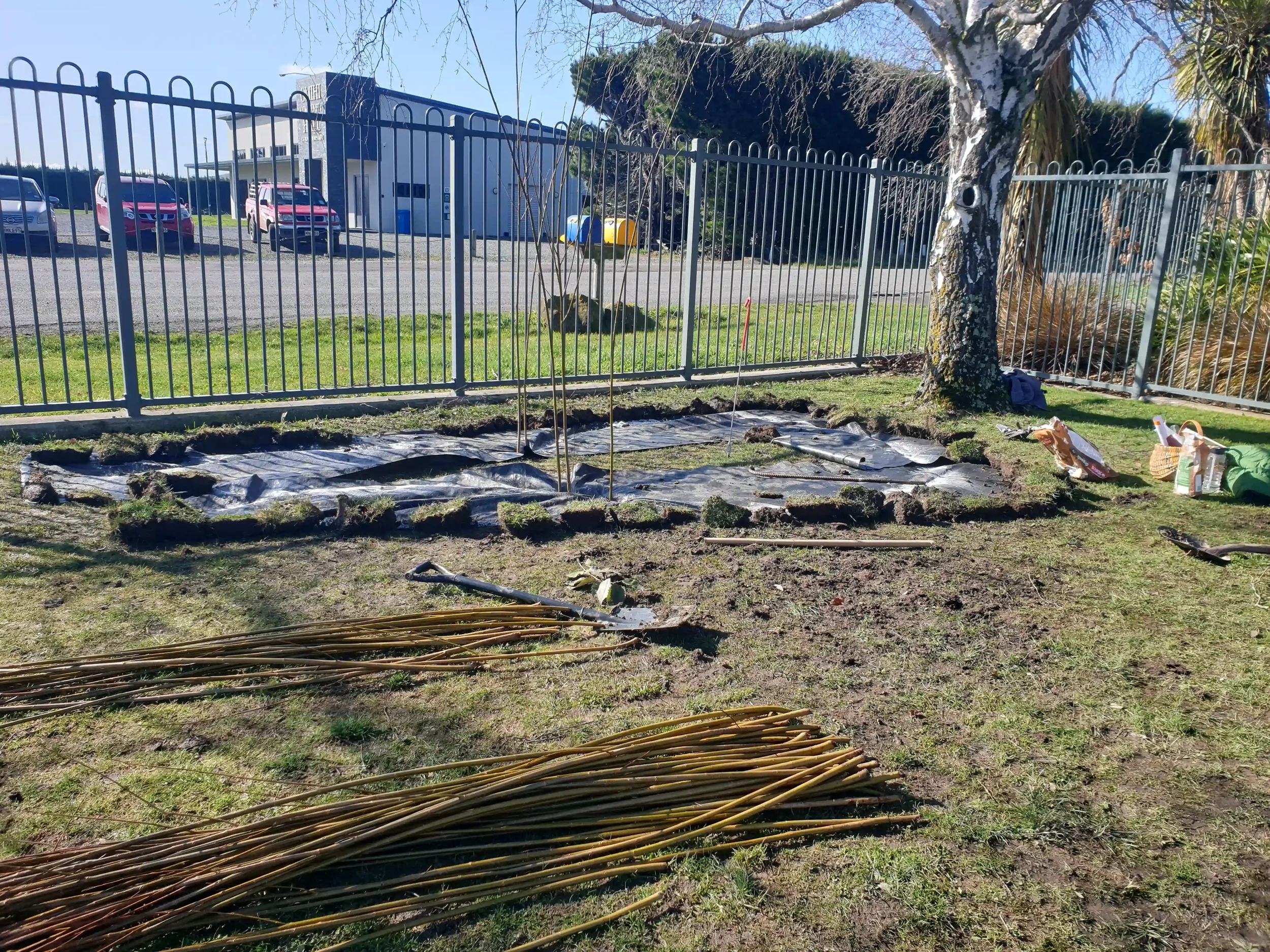
Preparing the Ground
In 2022, I worked on a project to create a willow hut and tunnel for my son’s school, Omihi Primary School. I ordered 70 living willow rods from Nicola Baham in Golden Bay during the winter. Once they arrived, I gathered ideas from the students about how they envisioned the space, and I incorporated their suggestions into my design for the tunnel and hut.
The students from the environmental group assisted me by digging a shallow trench and laying down ground cover to prevent weeds from suffocating the willows until they were fully established.
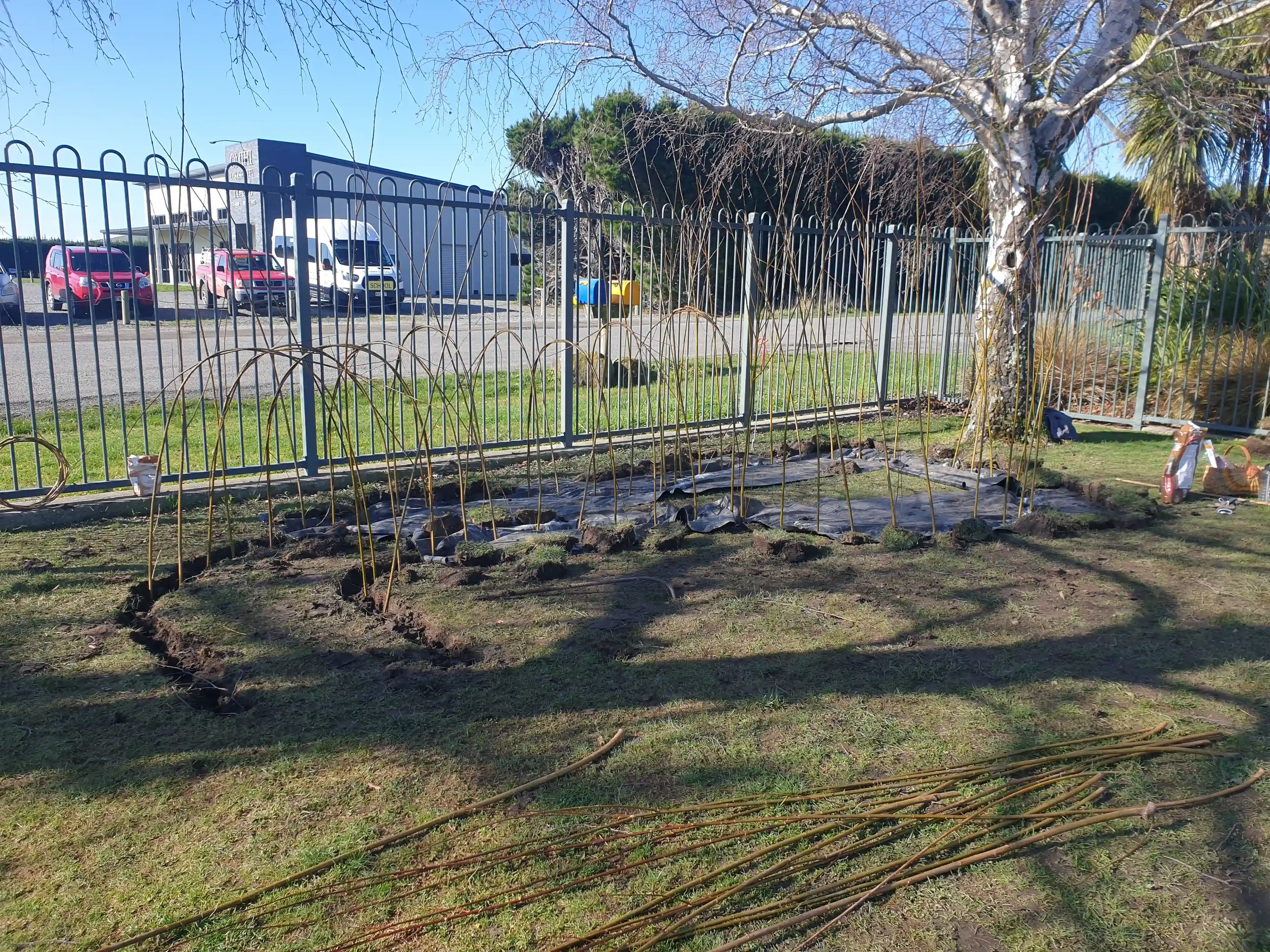
Planting the willow
After preparing the ground, I dug holes for the willows and planted them 30 cm into the soil. The willows were positioned diagonally, creating diamond-shaped formations, approximately 40 cm apart. I wove the willows over and under each other diagonally and then connected them to their partner willows on the opposite side of the tunnel.
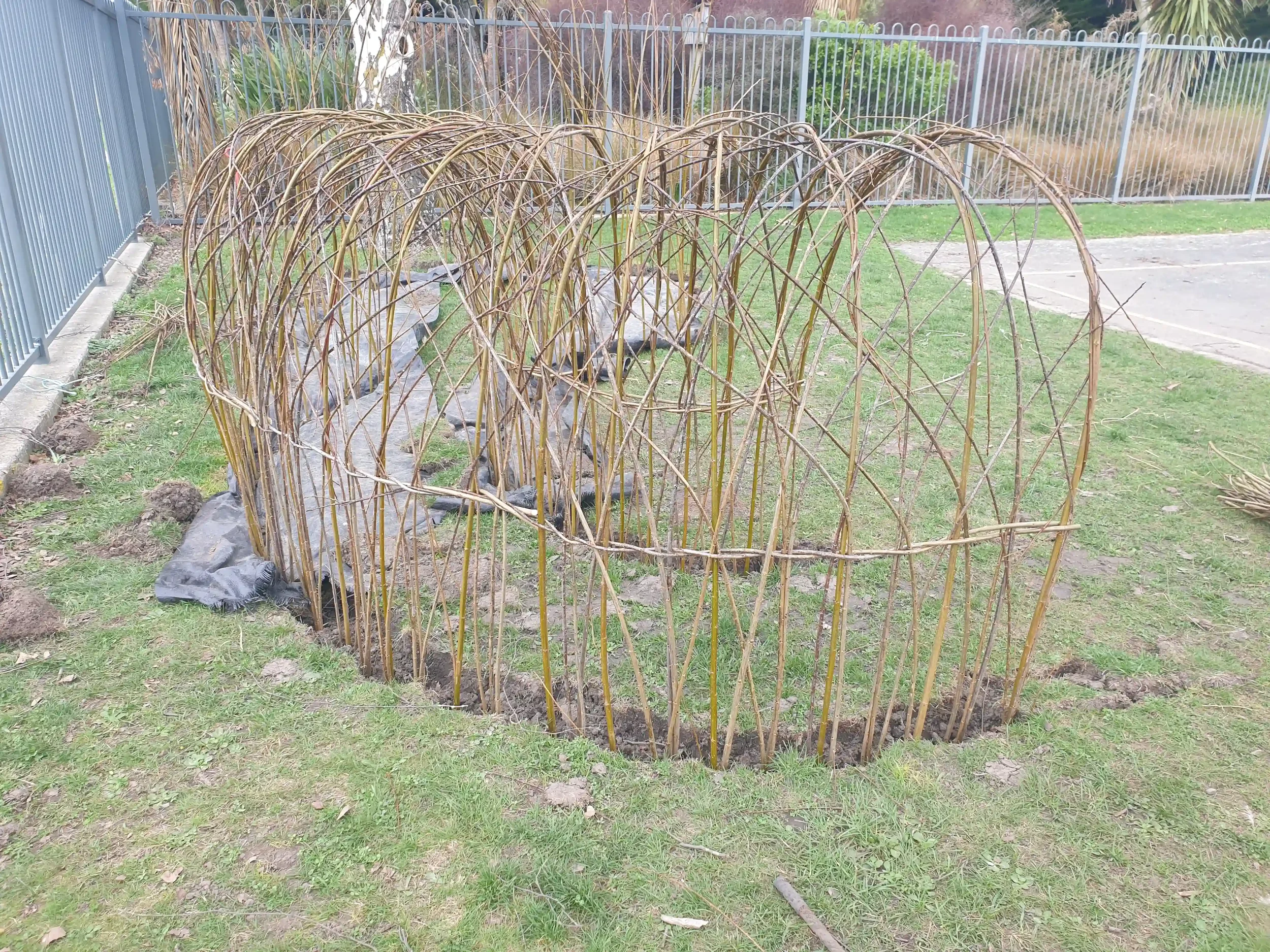
Making it denser
I wasn’t satisfied with how sparse the hut and tunnel were, so I supplemented the initial 70 willow rods I ordered from Golden Bay with willow from my own willow grove. This additional material created a much denser and stronger tunnel.
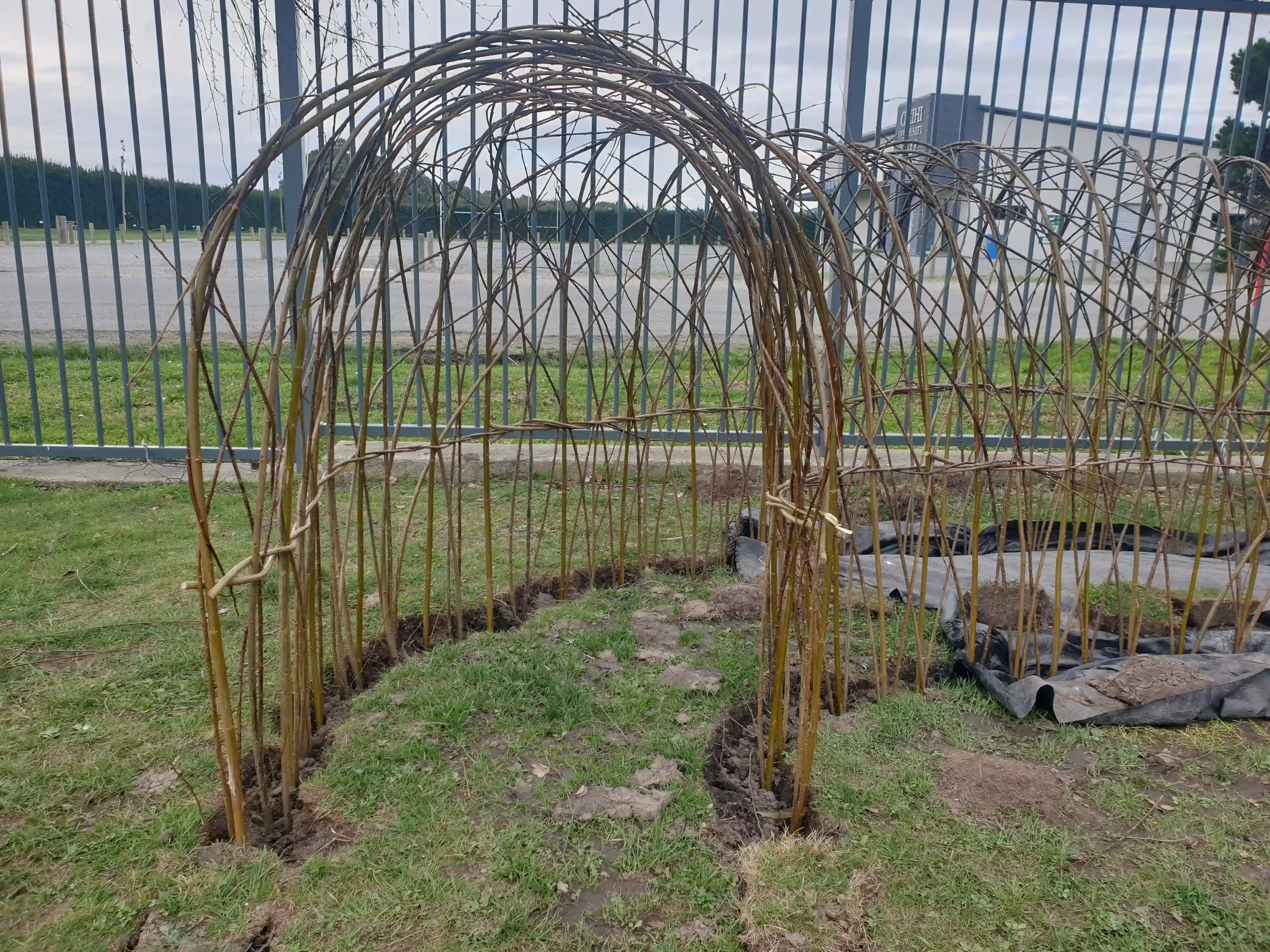
I also wove some rods between the uprights to secure them and ensure that little children wouldn’t try to push through before the willow was properly established.
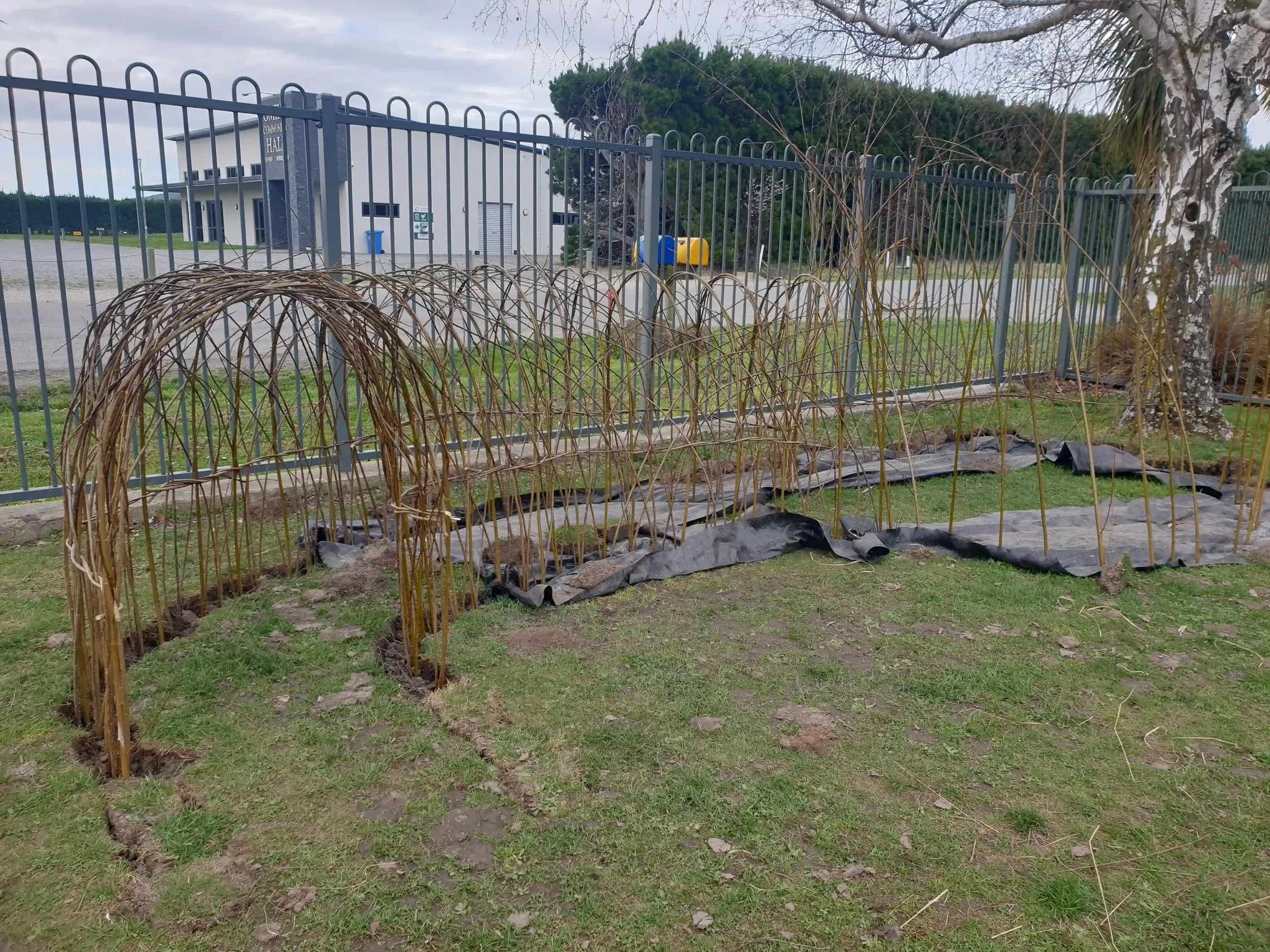
I was a bit ambitious with the size of the hut, and the willow rods ended up being too short to weave a dome. As a result, I left them unwoven, hoping that by the next year they would grow long enough to create a roof for the hut.
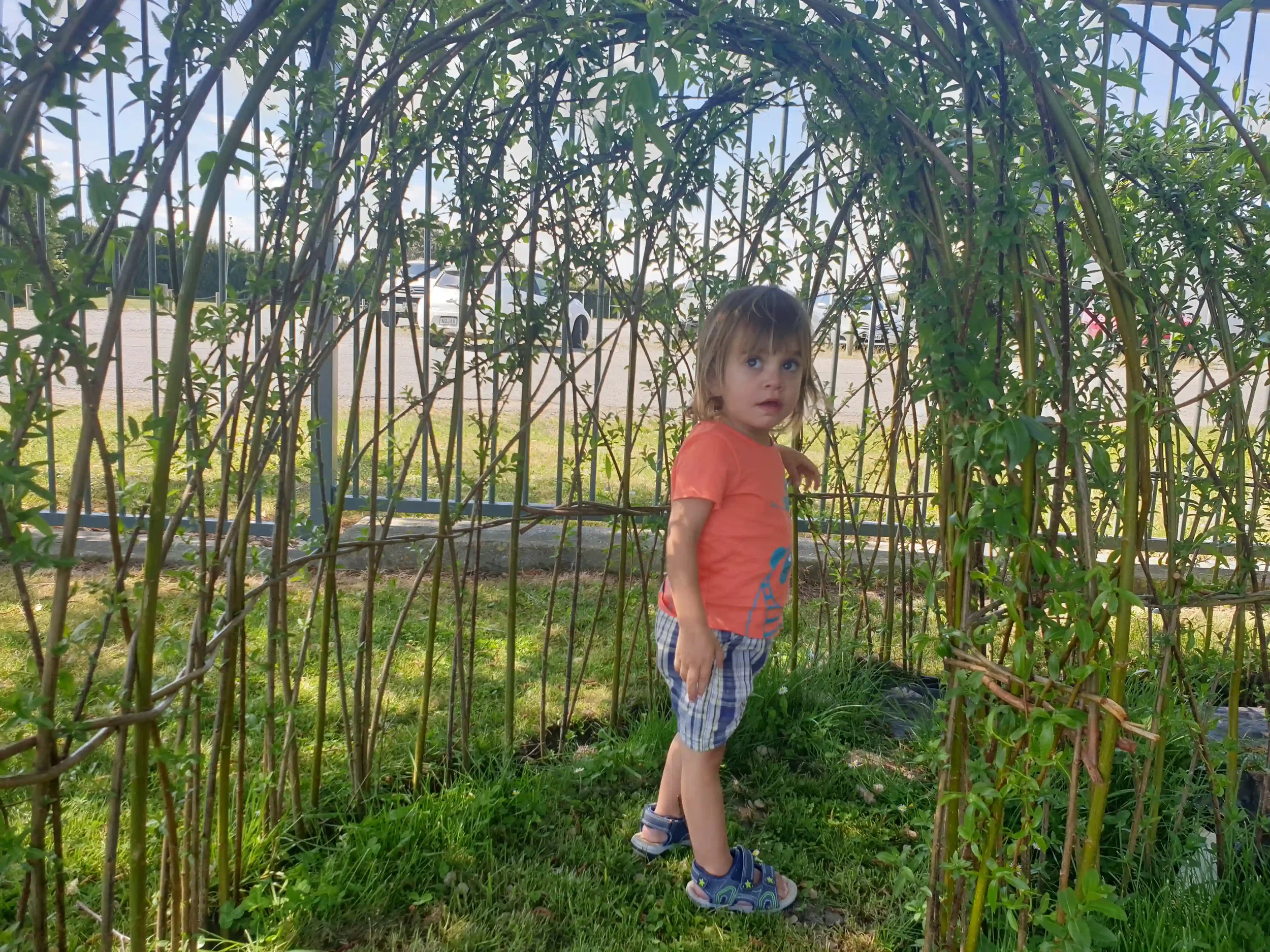
This photo was taken the following summer. The living willow tunnel and hut were growing beautifully, and my two-year-old was enjoying running in and out of the tunnel and peering through the windows I had woven into the hut.
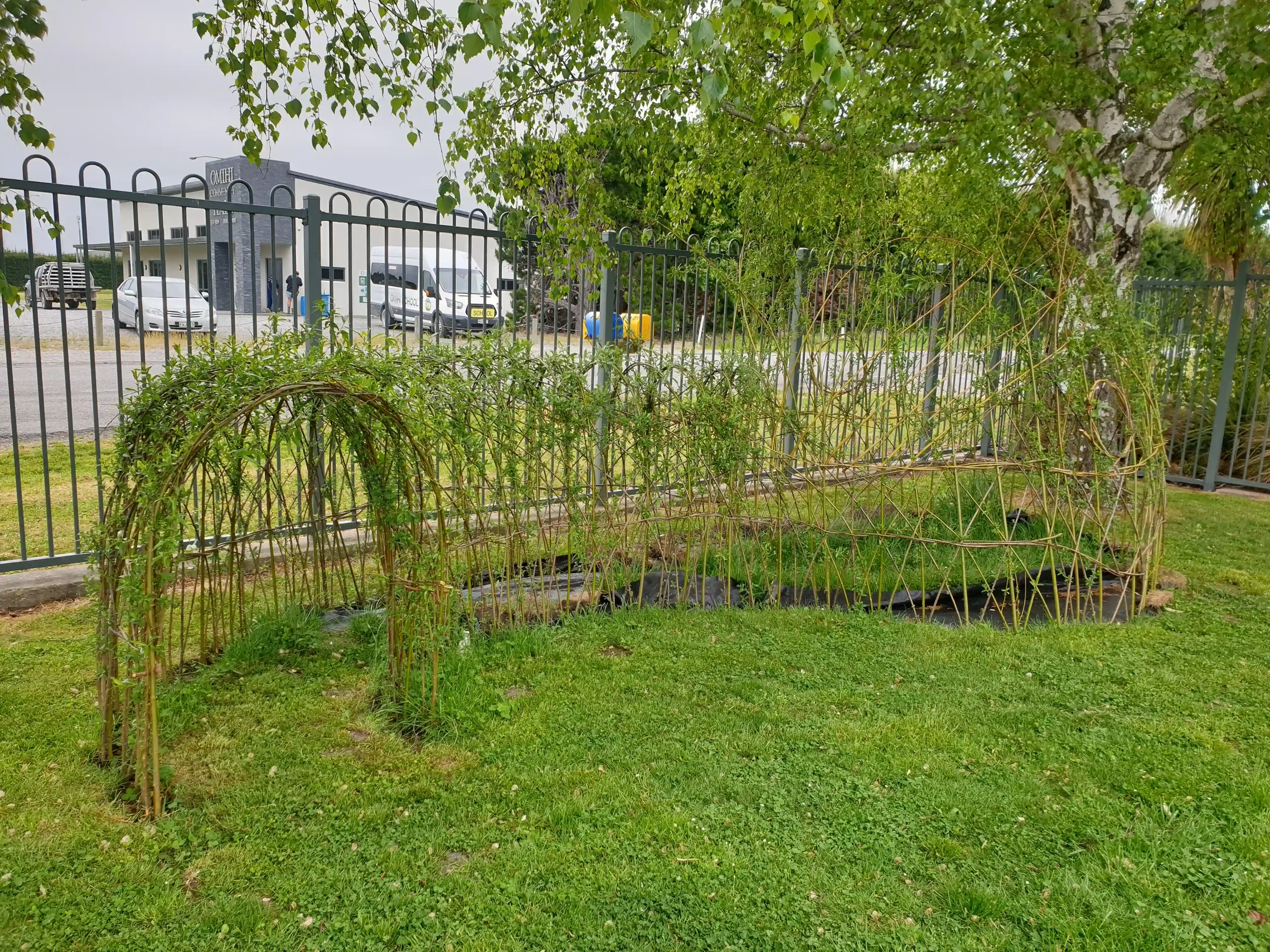
I would love to undertake more projects like this for schools and public spaces. Living willow huts and tunnels create magical and imaginative play areas for children. They are completely organic and biodegradable, actively absorbing carbon from the atmosphere and helping to mitigate climate change!
It was the greatest feeling to collect my boys from school in the afternoon and see a child reading in the shade of the hut or children peeking through the windows.